Word of the Week
Polarization: Merriam-Webster announced Polarization as their 2024 Word of the Year. Here, it is defined as the “division into two sharply distinct opposites; especially, a state in which the opinions, beliefs, or interests of a group or society no longer range along a continuum but become concentrated at opposing extremes.”
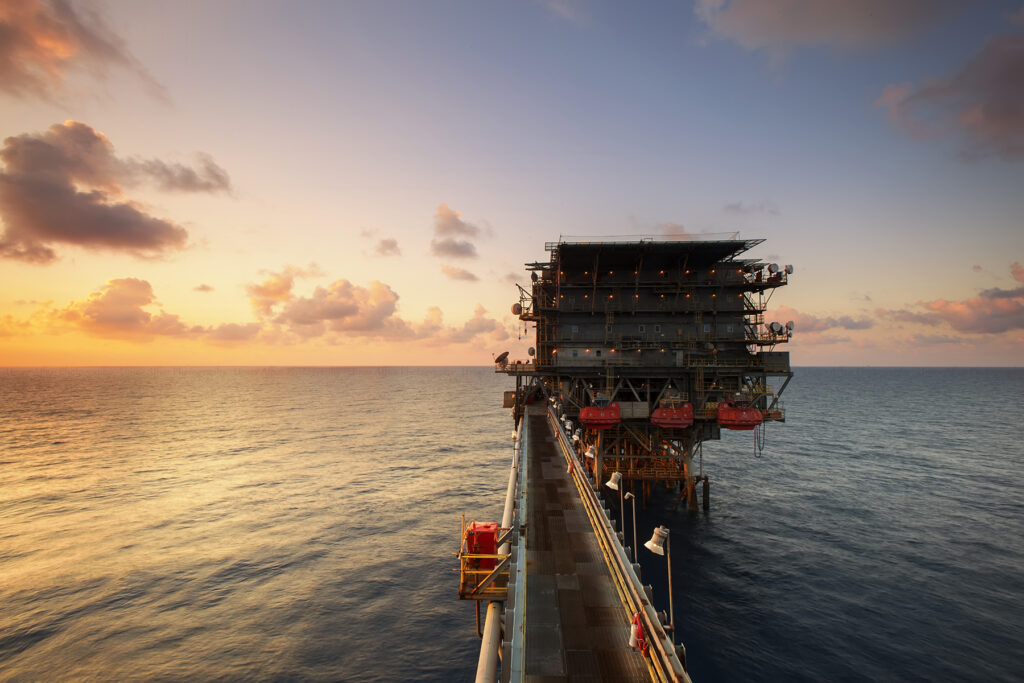
Ship Orders Increase as Industry Considers Supply Chain Disruptions
Shipowners have reportedly ordered a record number of new cargo vessels according to the BBC’s World Business Report.
The rise in new orders is not only indicative of the growth of the shipping sector but also of various changes in the sector seen over the last year. Not only have shipping companies seen a surge in revenues – which has prompted investment – but longer shipping routes caused by geopolitical tensions are also understood to be an important driver of new orders as existing vessels get used up for longer periods.
Last year of course, headlines were dominated by supply chain disruptions in the Red Sea. Given that the narrow stretch between the Red Sea and the Gulf of Aden acts as a pinch point to global commerce with around 12% of global shipping passing through it (along with 9% of the world’s natural gas and around 10% of the world’s oil exports), Houthi attacks on ships caused major issues to global shipping routes.
Following such attacks, players such as Mediterranean Shipping Company, Hapag-Lloyd, and Maersk diverted ships away from the Red Sea and Bab al-Mandab strait instead diverting them around the Cape of Good Hope. Accordingly, the average ultra large container vessel took an extra 9 days to travel from ports in Taiwan, Shanghai and Beijing to Rotterdam since they were travelling some 25,000km as opposed to 18,520km.
According to one expert speaking on the BBC’s World Business Report, the rise in orders therefore represents how shipping lines have “taken the initiative to mitigate a long-term closure of the Red Sea.”
Sticking with shipping, there has also been a rise in pricing across the industry recently. According to Bloomberg for example, 40-foot containers between Asia and the US’ West Coast rose 50% between the first week in December and first week in January.
The key consideration however is that the lag time between new orders and cargo vessels being birthed is typically 18 months, thus such a long-term strategy will not act as a short-term fix. Threats of strikes at US East and Gulf Coast ports also keep the industry on edge as we enter into a new year.
Gulf of America
With just 12-days to go until President Elect Donald Trump is inaugurated, all eyes were on his news conference at Mar-a-Lago yesterday afternoon. Here, the soon-to-be-president outlined some of his key aims for the administration alongside characteristically outlandish statements like turning Canada into the 51st State and his desire to control Panama and Greenland.
In the case of Greenland, he stated that the autonomous Danish territory was essential for America’s economic security, indicating that he would ramp up tariffs to bolster his ability to negotiate. (As an interesting point to note, In the aftermath of the Second World War, President Truman reportedly offered Denmark $100 million for the island, so Trump’s vision is not wholly unprecedented).
Regarding Panama, Trump said that “The Panama Canal is a disgrace, what took place at the Panama Canal. Jimmy Carter gave it to them for $1, and they were supposed to treat us well. I thought it was a terrible thing to do”.
Chiefly then, the Press Conference reiterated Trump’s ‘MAGA’ and ‘America First’ stance, as he criticised the US’ various trade deficits (particularly that with Canada and Mexico) and lamented over what he considered to be overly stringent environmental regulations. As we looked at yesterday, writing on Truth Social, Donald Trump said that “On January 20th, as one of my many first Executive Orders, I will sign all necessary documents to charge Mexico and Canada a 25% Tariff on ALL products coming into the United States, and its ridiculous Open Borders.”
He also overemphasised the US’ trade deficit with Canada as being $200bn, when it is more widely understood as $41bn.
As talk turned to Mexico, Trump also said that he intended to rename the Gulf of Mexico to the Gulf of America.
There were also some manifestly false statements. One such instance was Trump’s assertion that “According to Gallup, the American people’s confidence in the economy has just surged to the highest level in history.” In reality the survey – which started in in the 1990s, peaked in January 2000, when the index reached 56. It is now at -14.
Altri
Analisi di mercato
Find out how we have helped our clients meet their hedging requirements.
HCFX si unisce a Marex
Un audace passo avanti con l'unione di HCFX e Marex

Brevi accenni di pace
Donald Trump annuncia il cessate il fuoco tra Israele e Iran, confermata poi dal Presidente iraniano.

Iran alle strette
Donald Trump decide di unirsi alla guerra di Israele contro l'Iran, con una forte escalation del conflitto.

Alla finestra
L'outlook per l'euro è incerto a causa delle preoccupazioni per i possibili dazi imposti dagli Stati Uniti e delle vulnerabilità interne dell'Eurozona.

A colpi di tariffa
Le minacce di Trump di aumentare le tariffe hanno spinto i ministri dell'Unione Europea a concentrarsi sul miglioramento della competitività e dello sviluppo dei mercati dei capitali...

Trump annuncia dazi doganali per la Cina
Il mercato azionario asiatico mostra segni contrastanti questa mattina dopo che il presidente degli Stati Uniti Trump annuncia la possibilità di imporre dazi doganali al 10% sulle importazioni cinesi a partire dal primo febbraio.

I rendimenti dei bond alle stelle
Le aspettative di ulteriori allentamenti delle politiche da parte della Banca Centrale Europea mantengono l'Europa in difficoltà. In un dialogo politico al Forum Finanziario Asiatico (AFF) 2025...

L’equilibrio instabile francese
François Bayrou è il nome del nuovo Primo Ministro scelto da Macron, migliorando le speranze di stabilità politica in Francia...
Vuoi parlarci delle tue esigenze di gestione Forex?
Contattaci oggi stesso per sapere come una strategia Forex personalizzata può aiutarti a ottimizzare il risultato operativo.
 English
  Italian
  Spanish