Macro Monday:
Tesla’s robotaxis have just hit the streets of Austin, Texas—no driver, no steering wheel. It marks a bold leap into Elon Musk’s long-promised self-driving future.
Israel-Iran – The Weekend Update
As the Israel-Iran conflict rages on through the weekend and into the new working week, we thought it prudent to summarise an update on the matter.
Saturday morning saw a fresh trade of air attacks as the conflict slipped into a second week. This followed a flurry of failed diplomatic efforts in Genova late Friday. Reports from Iranian officials claimed that Iran will only step back in the room with US negotiators once Israel stops attacking it.
Later that day, unconfirmed reports suggested that Israel had hit the Isfahan nuclear research complex, Iran’s largest nuclear site. The same reports indicated that the strikes had failed to result in any hazardous leakages. State media reports two people were killed and a further four were injured in the central Iranian holy city of Qom in an unrelated wave of Israeli strikes.
The story of the weekend, however, has been the physical engagement of the US military late Saturday night. Trump announced that seven US B-2 bombers had struck three key Iranian nuclear sites under “Operation Midnight Hammer”.
Several deception tactics were deployed to mislead Iran’s defence systems, according to US Defence Secretary Pete Hegseth and Dan Caine. As the aircraft entered Iranian airspace, more than two dozen Tomahawk cruise missiles were launched from a US submarine, accompanied by a fleet of fighter jets. The lead B-2 aircraft dropped a total of 14 GBU-57 Massive Ordnance Penetrators (MOPs) – otherwise known as “Bunker Busters” – on two target areas. By 00:05 BST Sunday morning, all three Iranian nuclear sites had been hit, Caine continued.
Following the US strikes, Donald Trump wrote on Truth Social that the “damage to the nuclear sites in Iran is said to be monumental” and noted that the attacks were “hard and accurate”, executed with “great skill shown by our military”. The complete effectiveness of these strikes is unconfirmed at the time of writing.
As Sunday continued, Iran vowed retaliation. In a major move, news later divulged that Iran is threatening to close the Strait of Hormuz, a vital oil chokepoint. The chokepoint is the only sea route from the Persian Gulf to the open ocean, and about 20% of the world’s oil transits the waterway. The US Energy Information Administration has described it as the “world’s most important oil transit chokepoint.”
According to Goldman Sachs, if oil flows through the strait were to drop by 50% for one month and then were to remain down by 10% for another 11 months, Brent is forecast to “briefly jump” to a potential peak of around $110. Nations unaffected by strikes will most certainly be affected by the inflationary and low global growth implications that closing the strait could have.
The decision to close the waterway is now in the hands of the country’s National Security Council. Vandana Hari, founder of energy intelligence firm Vanda Insights, states that the possibility of closure remains “absolutely minimalistic”. If Iran blocks the strait, the country risks turning its neighbouring oil-producing countries into enemies and risks hostilities with them, she said. Furthermore, a closure would also provoke Iran’s market in Asia, particularly China, which accounts for a majority of Iran’s exports. “So very, very little to be achieved, and a lot of self-inflicted harm that Iran could do,” Hari continued. The US Secretary of State has since urged China to help prevent the closure of the strait.
With both global economic and social livelihoods still very much at stake, the world implores the countries involved to come to an agreement before it is too late.
Related
Commentary
Find out how we have helped our clients meet their hedging requirements.
Rick Rieder Flies Under the Radar As New FED Frontrunner
Rick Rieder has rapidly emerged as the leading market-implied candidate to become the next Chair of the Federal Reserve.
American Enforcement in Venezuelan Waters
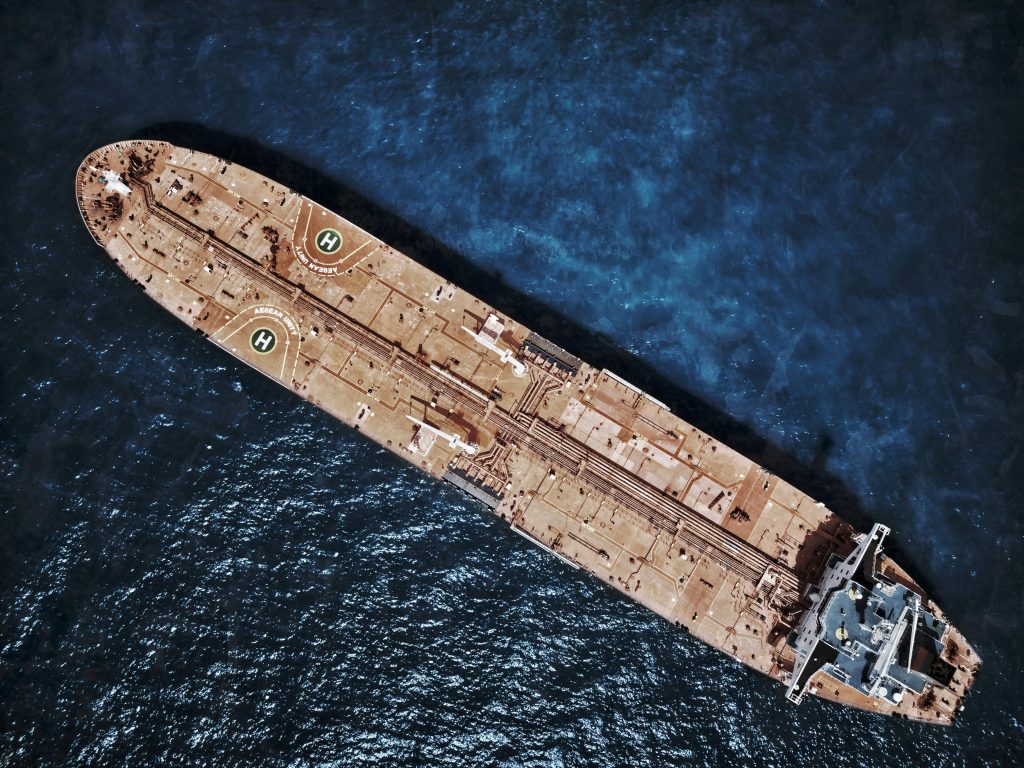
President Donald Trump has ordered a blockade of sanctioned oil tankers entering and leaving Venezuela, aiming to restrict the Maduro government’s remaining export channels and tighten compliance across the maritime trade network.
US and Japan Reach Trade Agreement
With financial markets remaining on edge over Trump’s ability to secure key trade agreements, a major breakthrough was reached overnight as the United States and Japan concluded a pivotal deal.
Japanese PM Suffers Blow in Upper House Elections
Japanese Prime Minister Shigeru Ishiba’s ruling coalition suffered a significant blow in Japan’s Upper House election on Sunday...
UK Labour Market Slows
In the latest sign that the UK labour market is continuing to slow down, this morning’s figures from the ONS indicate that unemployment rose as wage growth eased.

UK Inflation Rises Unexpectedly
Just days after the Governor of the Bank of England maintained that he “really [does] believe the path is downward" on interest rates...
North Korea Reaffirms “Unconditional Support” to Russia
This weekend Russian Foreign Minister Sergei Lavrov flew into Wonsan to meet Kim Jong Un, with the latter reaffirming North Korea’s “unconditional support” of Russia’s war in Ukraine.
HCFX joins Marex
A bold leap forward as HCFX joins with Marex
Ready to talk FX?
Get in touch today to see how FX strategy can drive commercial impact for your business.
 English
  Italian
  Spanish