Trump Turns on the Dollar
Travel Tuesday, Trump criticises strength of the dollar, protests continue in Venezuela after elections, and emergency savings measures announced by Reeves.
Travel Tuesday: Algeria
Algeria has one of the longest coastlines on the Mediterranean Sea. Stretching for over 1,600 kilometers, Algeria boasts stunning coastal landscapes, making it a hidden gem for beach lovers and water sports enthusiasts.
GDP $195 billion
Biggest Export Hydrocarbons (primarily natural gas and crude oil)
Biggest Trading Partners Spain, Italy, France, China, and Brazil
Political System Semi-presidential republic. The President holds significant executive power.
National Animal The fennec fox
Next Election 7 Sep
Trump Turns on the Dollar
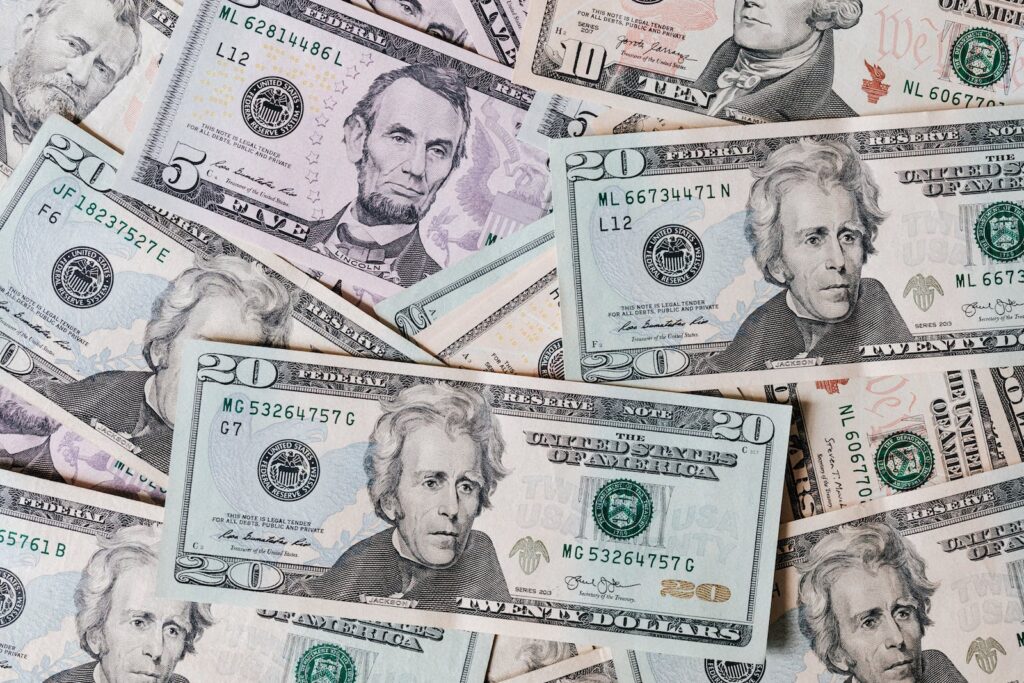
As the campaign trail continues and the Republican nominee Donald Trump goes on the attack, his latest target is the US dollar.
Trump’s stance towards the strength of the dollar changed substantially during his first term, often making inconsistent statements throughout his tenure. Nevertheless, Trump’s latest stance has seen him criticise the strength of the dollar and indicate that he may look for ways to depreciate its value.
The trade weighted DXY dollar index is currently trading at around 104 having subsided from recent highs of 113 seen during 2022. Generally speaking, the recent strength of the dollar has been attributed to the Fed’s tightening of monetary policy, strong economic fundamentals (including a robust labour market and strong growth relative to its peers), and geopolitical instability seeing a move towards safe-haven assets.
Speaking to reporters at Bloomberg, Trump however called this strength a “a tremendous burden” to companies exporting US goods, while simultaneously criticising Beijing for artificially depreciating the renminbi.
Trump’s running mate JD Vance has also been critical of a strong dollar which he argues is tantamount to a tax on American producers.
Though the strength of the dollar helps keeps American imports less costly, Vance has said that this has merely led to the nation’s “mass consumption of mostly useless imports”.
At the heart of Trump’s campaign against the strength of the dollar is his intention to reduce America’s current account deficit. According to the Bureau of Economic Analysis, the US current-account deficit widened by 7.2% to $237.6 billion over the first quarter of this year. This means that the US current account deficit is roughly 3.4% of GDP
According to The Economist however “A common rule of thumb suggests that closing the current-account deficit by weakening the dollar would require roughly a 30% depreciation, which would boost inflation by 1-2 percentage points”. This would of course run contrary to the Fed’s desire to ease inflation and likely result in the central bank holding for longer.
Despite Trumps intentions, many commentators argue that the inflationary implications of his tax cuts could force the Fed to maintain tighter conditions for longer, thereby strengthening the dollar.
According to Bloomberg’s Saleha Mohsin and Carter Johnson, “Trump’s declared desire to pressure the greenback has left everyone trying to read the tea leaves for clues as to how he might go about the task — and who he might put in charge of it.”
Crisis in Venezuela
In Caracas, protests continue to escalate over Nicolas Maduro’s claims to victory at this weekend’s elections.
As well as domestic upheaval, Venezuela have kicked out ambassadors from seven South American countries after Javier Milei of Argentina said “Not even he believes the electoral scam he celebrates. Neither does the Republic of Argentina”.
The US have said that the results are inconsistent with what they had been expecting based on pre-poll data and have called on the Maduro government to release polling station data to back up the result – which so far has not been forthcoming.
The question now will be if the US are willing to roll back on their recent sanctions relaxation or if, in doing so, they fear a doubling down on Maduro’s closer relations with Russia.
Reeves Announces Savings Measures
In an address to parliament yesterday afternoon, the Chancellor Rachel Reeves announced emergency savings measures to sure up what she identified as a £22bn “black hole” in the nation’s finances.
Here, she stated that “Upon my arrival at the Treasury three weeks ago, it became clear that there were things I did not know”.
Included in the measures is the plan to cut £1.5bn in winter-fuel payments to better-off pensioners, in addition to curtailing some road and rail projects. Laying the foundation for further fiscal tightening Reeves said that “There will be difficult decisions around spending, around welfare and around taxes,”
Some £9.4bn of this sum is derived from accepting the independent public sector pay review bodies’ recommendations over the next fiscal year. Indeed yesterday, Reeves announced a 22% increase in pay for junior doctors, something which the BMA is expected to recommend to its members.
Attention now turns to the release of the budget on 30 October.
Related
Commentary
Find out how we have helped our clients meet their hedging requirements.
Rick Rieder Flies Under the Radar As New FED Frontrunner
Rick Rieder has rapidly emerged as the leading market-implied candidate to become the next Chair of the Federal Reserve.

American Enforcement in Venezuelan Waters
President Donald Trump has ordered a blockade of sanctioned oil tankers entering and leaving Venezuela, aiming to restrict the Maduro government’s remaining export channels and tighten compliance across the maritime trade network.
US and Japan Reach Trade Agreement
With financial markets remaining on edge over Trump’s ability to secure key trade agreements, a major breakthrough was reached overnight as the United States and Japan concluded a pivotal deal.
Japanese PM Suffers Blow in Upper House Elections
Japanese Prime Minister Shigeru Ishiba’s ruling coalition suffered a significant blow in Japan’s Upper House election on Sunday...
UK Labour Market Slows
In the latest sign that the UK labour market is continuing to slow down, this morning’s figures from the ONS indicate that unemployment rose as wage growth eased.

UK Inflation Rises Unexpectedly
Just days after the Governor of the Bank of England maintained that he “really [does] believe the path is downward" on interest rates...
North Korea Reaffirms “Unconditional Support” to Russia
This weekend Russian Foreign Minister Sergei Lavrov flew into Wonsan to meet Kim Jong Un, with the latter reaffirming North Korea’s “unconditional support” of Russia’s war in Ukraine.
HCFX joins Marex
A bold leap forward as HCFX joins with Marex
Ready to talk FX?
Get in touch today to see how FX strategy can drive commercial impact for your business.
 English
  Italian
  Spanish