Trump Declares Victory
Following a tumultuous election campaign, Donald Trump has declared victory in the US Presidential election asserting that 'America has given us an unprecedented and powerful mandate'. With just seven results to go, his path to victory is all but concluded.
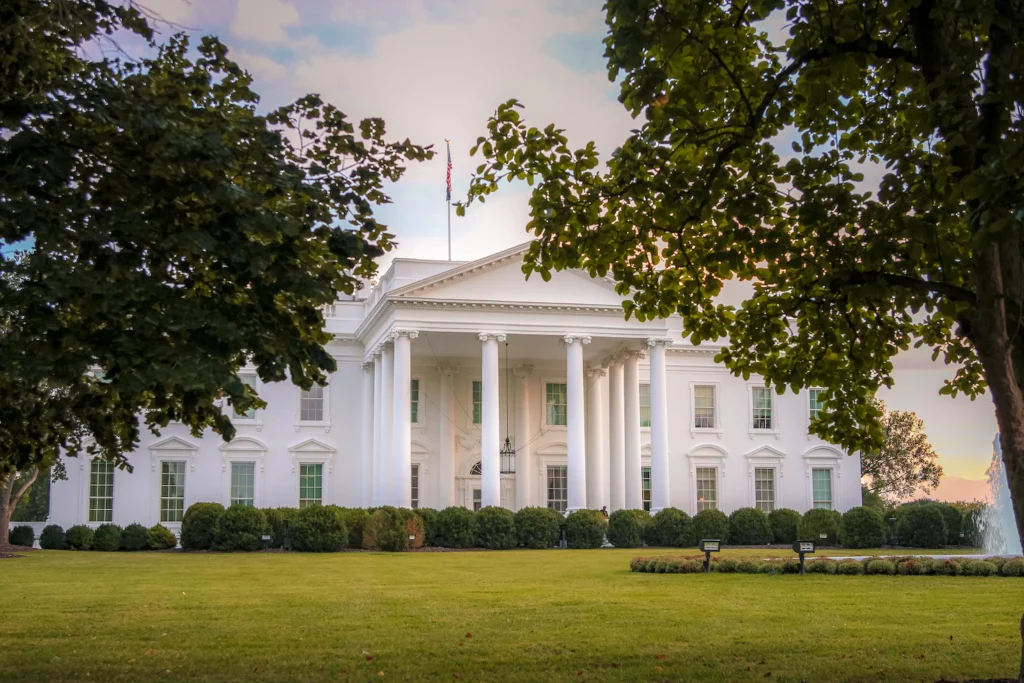
Following a tumultuous election campaign, Donald Trump has declared victory in the US Presidential election asserting that ‘America has given us an unprecedented and powerful mandate’. With just seven results to go, his path to victory is all but concluded.
At the time of writing the Republican candidate has secured 266 Electoral College votes, against Kamala Harris’ 219, putting the former President just four votes away from ensuing the majority needed to gain the keys to the White House come January.
This comes as three of the seven swing states namely, Georgia, North Carolina and Pennsylvania – which have featured so heavily in focus given widespread expectations of a tight race – have been won by Trump. Meanwhile the remaining swing states Arizona, Michigan, Nevada and Wisconsin are presently ‘Leaning Republican’ given the makeup of votes that have already been counted.
The Republican’s also look set to retake control of the Senate given projections that the GOP will have 51 seats (in addition to the VP who serves as presiding officer in the Upper House). This follows wins for Republicans in Virginia and Ohio, while other incumbents like Ted Cruz in Texas have fended off Democratic challenges and secured re-election.
While the results of the House may not be known for days, Republican success in the Presidential and Senate are indicating that the party may secure a sweep in Congress, streamlining their ability to push legislation forward.
Attention now turns to the impact that a second Trump term will have on the legislative agenda of the World’s largest economy in addition to the global ramifications of his domestic and foreign polices.
In a world where international trade accounts for 63% of global GDP, question marks remain over the extent to which Trump’s ‘MAGA’ and ‘America First’ policies of reshoring and tariffs will have on the global economy. Indeed, with trading relationships spanning all corners of the globe, the US is the world’s second largest trading nation with its trade in goods and services exceeding $7tn annually.
However, with Trump lamenting over the US’ trade deficit (roughly $1tn a year), the campaign trail has featured Trump floating ideas like a 60% import tariff on all Chinese goods and a 10-20% tariff on all of the US’ $3.2tn imports alongside 20% tariffs on European car imports and 100% tariff on cars from Mexico.
As we have looked at previously, the potential inflationary pressures of these tariffs may thus force the Fed to alter their monetary policy pathway with tighter monetary conditions.
The Peterson Institute for International Economics has also indicated that such tariffs may cause “significant collateral damage on the US economy” with their modelling suggesting that the wider cost to consumers would total no less than $500 billion (three quarters the size of the Michigan economy).
Also in focus will be the US’ deficit and spiralling sovereign debt. Last month for example, we investigated the Committee for a Responsible Federal Budget’s report which analysed the impact that either Trump could have on the nation’s finances.
The report warned that “the next President will face significant fiscal challenges upon taking office, including record debt levels, large structural deficits, surging interest payments, and the looming insolvency of critical trust fund programs”.
According to the CRFB’s central estimate, Trump’s plans could raise the US’ national debt by $7.5tn. On a high estimate, the report further indicated that Trump’s plans could increase national debt by a colossal $15.15tn (against Harris’ high estimate of $8.1tn). The publication comes against a backdrop of US debt-to-GDP standing at $33.17tn or 121% of GDP during the 2023 fiscal year (though it has since risen to $35.68tn).
Markets will now also pay considerable attention to other domestic policies floated by Trump including tax cuts and energy polices alongside his foreign policy towards trade agreements, China, NATO and conflicts across Ukraine and the Middle East.
In the near term, all eyes continue to focus on the remaining results from across the Atlantic as the World considers the impact that that the election will have on the political trajectory of the United States.
Related
Commentary
Find out how we have helped our clients meet their hedging requirements.
Rick Rieder Flies Under the Radar As New FED Frontrunner
Rick Rieder has rapidly emerged as the leading market-implied candidate to become the next Chair of the Federal Reserve.

American Enforcement in Venezuelan Waters
President Donald Trump has ordered a blockade of sanctioned oil tankers entering and leaving Venezuela, aiming to restrict the Maduro government’s remaining export channels and tighten compliance across the maritime trade network.

US and Japan Reach Trade Agreement
With financial markets remaining on edge over Trump’s ability to secure key trade agreements, a major breakthrough was reached overnight as the United States and Japan concluded a pivotal deal.

Japanese PM Suffers Blow in Upper House Elections
Japanese Prime Minister Shigeru Ishiba’s ruling coalition suffered a significant blow in Japan’s Upper House election on Sunday...

UK Labour Market Slows
In the latest sign that the UK labour market is continuing to slow down, this morning’s figures from the ONS indicate that unemployment rose as wage growth eased.

UK Inflation Rises Unexpectedly
Just days after the Governor of the Bank of England maintained that he “really [does] believe the path is downward" on interest rates...

North Korea Reaffirms “Unconditional Support” to Russia
This weekend Russian Foreign Minister Sergei Lavrov flew into Wonsan to meet Kim Jong Un, with the latter reaffirming North Korea’s “unconditional support” of Russia’s war in Ukraine.

HCFX joins Marex
A bold leap forward as HCFX joins with Marex
Ready to talk FX?
Get in touch today to see how FX strategy can drive commercial impact for your business.
 English
  Italian
  Spanish