Harris and Trump Go Head-to-Head in ABC’s Presidential Debate
Word of the week Wednesday, Harris and Trump meet in ABC's presidential debate, flash poll by CNN, and Briton's excess savings.
Word of the Week Wednesday
Sahm Rule: In the US, the Sahm rule considers how a recession is underway when the three-month average unemployment rate rises by 0.50% or more from its 12-month low.
Harris and Trump Go Head-to-Head in ABC’s Presidential Debate
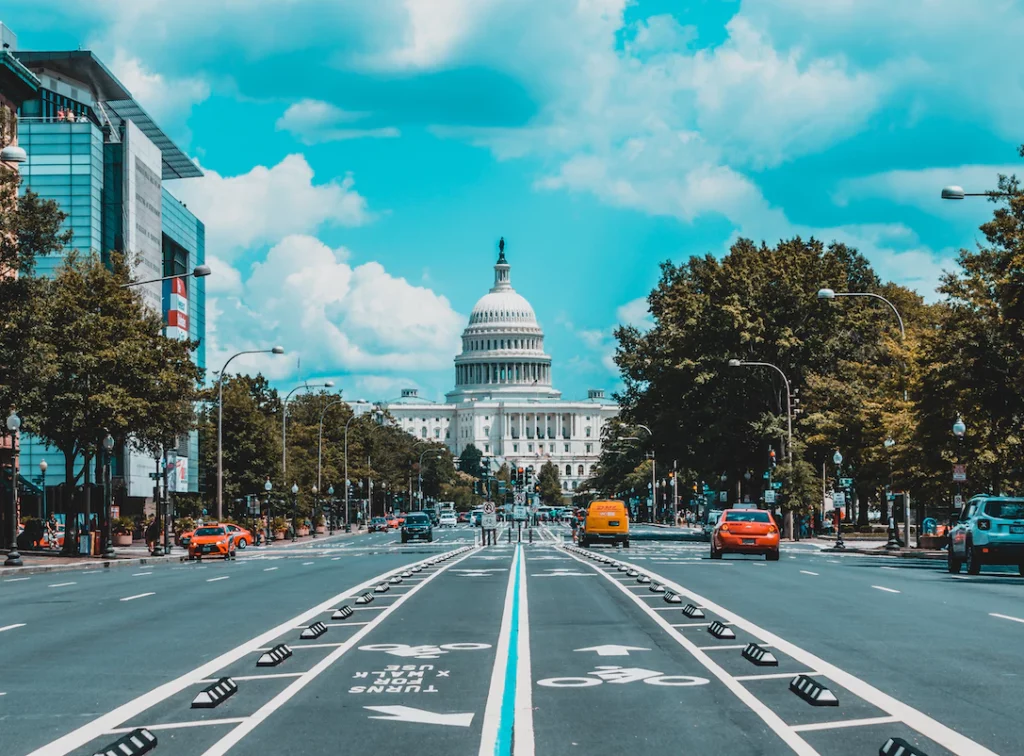
Under the spotlight of ABC’s Presidential Debate, and with just 55 days to go until the US electorate heads to the polls, yesterday evening marked the first time both presidential candidates met each other in person.
Over the course of the 105-minute debate, Former President Donald Trump and Vice-President Kamala Harris went head-to-head on key issues including the economy, healthcare, abortion, Middle East relations, the Russia-Ukraine war and immigration.
Harris was generally on the offensive, prosecuting Trump on his record around the pandemic, the criminal cases brought against him, and his economic policies. Trump meanwhile attacked Harris on her record as Vice-President and lack of polices looking forward. On a number of occasions, ABC moderators had to fact-check Trump who made a series of outlandish and baseless statements. A comprehensive fact-check of the debate can be found on NBC here.
On the topic of the economy, both candidates pledged to do more to alleviate cost of living pressures for the millions of households across America.
Here, Trump – the self-described “Tariff Man’” – also reiterated his calls for a 10% import tariff on the US’ $3tn worth of imports along with a 60% tariff on Chinese goods.
According to Harris – citing research from the Centre for American Progress – such tariffs could raise prices on middle class families by as much as $4,000 a year. Meanwhile, according to the Peterson Institute for International Economics, such tariffs would cause “significant collateral damage on the US economy”. Their modelling indicates that the wider cost to consumers would total no less than $500 billion (three quarters the size of the Michigan economy). All told, the institute forecast this could cost the US economy 1.8% of GDP, causing nearly five times the impact of Trump’s 2019 tariffs. Such a negative impact, according to data from the Penn-Wharton Budget Model, would translate to the median U.S. household loosing around $500 to $550 a year.
For more highlights of the debate, the BBC’s coverage can be found here.
Polling
In a flash poll conducted by CNN, the majority of registered voters who watched the debate indicated that Harris outperformed Trump. According to the poll conducted by SSRS, 63% believed Harris performed stronger than Trump, with 37% holding the contrary view.
Here, they also said that “Among voters who watched the debate and identify as political independents, Harris’ favourability rose to 48% after the debate, up from just 30% before”.
Away from the debate, recent polling suggests that Harris is holding a marginal lead on Trump in relation to voter intentions. For example, an aggregation of polls conducted by RealClearPolitics points to the incumbent VP holding a margin of 1.1 percentage points, in the period between 5 August and 10 September.
Race to the WH and 270toWin also put Harris 2.6 and 0.8 percentage points ahead of the Republican nominee, respectively. Such polling indicates that while Harris has closed the gap inherited by Biden, her lead may now be slimming.
Sticking with polling in relation to salient issues, according to Statista Research Department, the most important issue for voters in the US are inflation (25%), Immigration (11%), Healthcare (10%), Jobs and the Economy (10%) and Abortion (8%).
UK’s Excess Savings Mountain
There’s an interesting article in the FT today about how much Britons have in “excess savings”. Research by Barclays shows that there’s more than £400bn excess cash being held in bank accounts, that could otherwise be invested in win-win situation.
Excess savings are defined as cash people hold that is in excess of six months of living expenses. By Barclays’ reckoning there are more than 13 million adults that find them in this situation, with a collective balance worth more than the entire value of the FTSE 250!
Now clearly if this money could be unlocked to invest in UK businesses and infrastructure, it would be a huge win for companies looking to access capital and it could also be a major win for the individuals who are only just breaking even on savings rate Vs inflation of late.
The biggest barriers to unlocking this cash, according to the research, are the red tape around firms being able to give any kind of investment advice and the steps the consumer has to go through – risk warnings, disclaimers, declarations etc. – on actually investing the money.
The regulator, the FCA, has said they’ll be working with the government “to build an advice and guidance framework which consumers can trust, recognising the complexity faced by consumers in making financial decisions…to achieve this, we need to create a system that ensures consumers get the help they want, at a time they need it and at a cost that is affordable” – which sounds great, but also like a very long winded process, so we won’t expect this to be unlocked anytime soon.
Related
Commentary
Find out how we have helped our clients meet their hedging requirements.
Rick Rieder Flies Under the Radar As New FED Frontrunner
Rick Rieder has rapidly emerged as the leading market-implied candidate to become the next Chair of the Federal Reserve.

American Enforcement in Venezuelan Waters
President Donald Trump has ordered a blockade of sanctioned oil tankers entering and leaving Venezuela, aiming to restrict the Maduro government’s remaining export channels and tighten compliance across the maritime trade network.
US and Japan Reach Trade Agreement
With financial markets remaining on edge over Trump’s ability to secure key trade agreements, a major breakthrough was reached overnight as the United States and Japan concluded a pivotal deal.

Japanese PM Suffers Blow in Upper House Elections
Japanese Prime Minister Shigeru Ishiba’s ruling coalition suffered a significant blow in Japan’s Upper House election on Sunday...
UK Labour Market Slows
In the latest sign that the UK labour market is continuing to slow down, this morning’s figures from the ONS indicate that unemployment rose as wage growth eased.

UK Inflation Rises Unexpectedly
Just days after the Governor of the Bank of England maintained that he “really [does] believe the path is downward" on interest rates...

North Korea Reaffirms “Unconditional Support” to Russia
This weekend Russian Foreign Minister Sergei Lavrov flew into Wonsan to meet Kim Jong Un, with the latter reaffirming North Korea’s “unconditional support” of Russia’s war in Ukraine.

HCFX joins Marex
A bold leap forward as HCFX joins with Marex
Ready to talk FX?
Get in touch today to see how FX strategy can drive commercial impact for your business.
 English
  Italian
  Spanish