FCA Summon Banking Execs to Address Savings Rates
Saving rates to be addressed by Banking Execs, interest rates held by RBA, and US yield curve inversion hits deepest level.
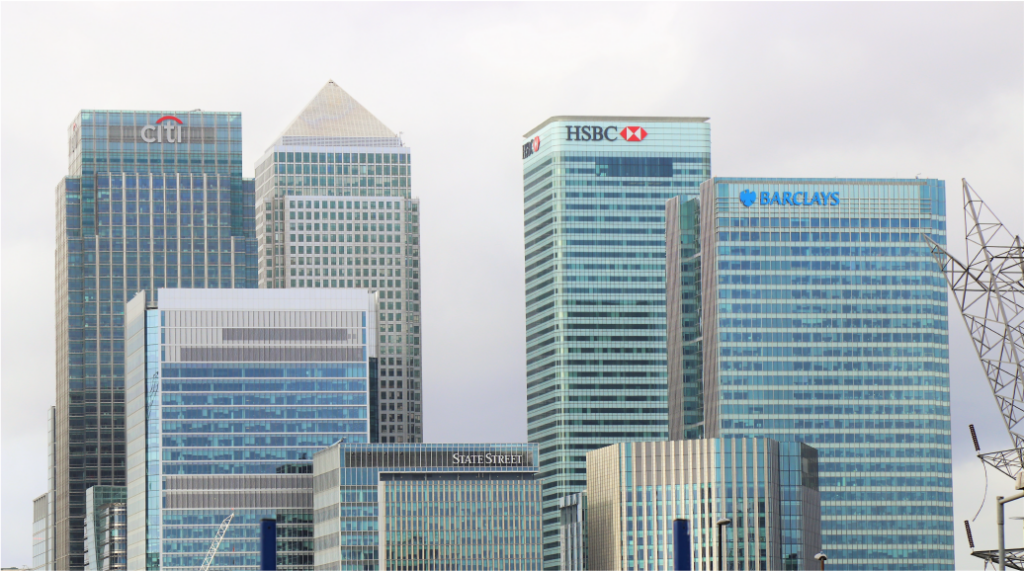
The FCA has summoned a meeting of executives at HSBC, NatWest, Lloyds and Barclays to discuss savings rates amid accusations that they are failing to pass on higher interest rates. The FT were the first to comment on the meeting and stated that “The FCA and the executives are planning to discuss the pricing of cash savings and how banks communicate with their customers on rates, said people familiar with the agenda.” They continued by stating that “the meeting could result in a “savings charter” as they cited sources close to the situation. The topic comes as the Bank of England recently conducted their 13th consecutive rate hike to bring borrowing rates to fresh 2008 highs as some price in the prospect of Threadneedle Street’s rising its benchmark rate to 6%.
Last week, Jeremey Hunt described how banks were “taking too long” to pass on savings rates to consumers, particularly in the case of instant access accounts. The chancellor’s comments follow the Treasury Select Committee’s concerns that savings rates were not being passed on to consumers and highlighted that “something is going wrong when banks are profiting from rising interest rates while savers aren’t seeing the benefits.” Their concerns saw them similarly summon execs at HSBC, NatWest, Lloyds and Barclays earlier this year to discuss the matters including their soaring net interest incomes and margins.
As we looked at in February, figures evidenced in annual reports reveal that these banks’ net interest income (the difference between what banks charge consumers to borrow vs what the pay on consumers’ savings) has soared given a rise in their net interest margin. Figures evidenced in annual reports reveal for example that Lloyds’ net interest margin rose 0.4 percentage points from 2.54% to 2.94% which saw their net interest income rise from £11.2bn to £13.2bn over the course of that year. Meanwhile NatWest saw their net interest income rise £7.5bn to £9.8bn as their net interest margin rose 0.55 percentage points from 2.3%.
UK Finance, who act as the trade body for the banking sector, maintain that since savings and mortgage rates “aren’t directly linked” they subsequently “move at different times and by different amounts”. Some are also describing the FCA’s approach as regulatory overreach as banks try to prepare for the potential for a rise in defaults.
RBA Hold Interest Rates
This morning saw the Reserve Bank of Australia maintain their benchmark rate at 4.1%, against expectations of a 25bps rate hike. The decision to pause their monetary tightening followed the 25bps hike in June which added to the RBA’s 400bps of hikes seen since last May. Citing the drop in headline inflation (which retreated to 5.6% in May), the RBA maintains that inflation has passed its recent peak. Nevertheless, against the CB’s dovish decision, policy makers rhetoric remained somewhat hawkish indicating that further rate hikes may be needed down the line to bring inflation back to their 2-3% target.
US Yield Curve Inversion
Yesterday the US 2/10-year yield curve inversion hit its deepest level since 1981 as financial markets price in the potential for rising rates and economic uncertainty. During Monday’s session the yield on the two-year surpassed that of the 10-year by as much as 110.9bps with the 2-year at 4.96%.
Given that this signal has been a prelude to every recession in the US since 1950 (within the space of two years), many investors are weighing up the possibility of a recession. Nevertheless, as analysts including Erin Browne of Pacific Investment Management Co. have pointed out “[the] yield curve inversion may not be as good of an indicator as it has been in the past, particularly given the enormous amount of quantitative easing undertaken by global central banks”.
Yesterday’s yield curve inversion came amongst a choppy session in the US which saw the ISM manufacturing data for June soften to a three-year low.
Related
Commentary
Find out how we have helped our clients meet their hedging requirements.

Rick Rieder Flies Under the Radar As New FED Frontrunner
Rick Rieder has rapidly emerged as the leading market-implied candidate to become the next Chair of the Federal Reserve.

American Enforcement in Venezuelan Waters
President Donald Trump has ordered a blockade of sanctioned oil tankers entering and leaving Venezuela, aiming to restrict the Maduro government’s remaining export channels and tighten compliance across the maritime trade network.

US and Japan Reach Trade Agreement
With financial markets remaining on edge over Trump’s ability to secure key trade agreements, a major breakthrough was reached overnight as the United States and Japan concluded a pivotal deal.

Japanese PM Suffers Blow in Upper House Elections
Japanese Prime Minister Shigeru Ishiba’s ruling coalition suffered a significant blow in Japan’s Upper House election on Sunday...

UK Labour Market Slows
In the latest sign that the UK labour market is continuing to slow down, this morning’s figures from the ONS indicate that unemployment rose as wage growth eased.

UK Inflation Rises Unexpectedly
Just days after the Governor of the Bank of England maintained that he “really [does] believe the path is downward" on interest rates...

North Korea Reaffirms “Unconditional Support” to Russia
This weekend Russian Foreign Minister Sergei Lavrov flew into Wonsan to meet Kim Jong Un, with the latter reaffirming North Korea’s “unconditional support” of Russia’s war in Ukraine.

HCFX joins Marex
A bold leap forward as HCFX joins with Marex
Ready to talk FX?
Get in touch today to see how FX strategy can drive commercial impact for your business.
 English
  Italian
  Spanish