Snap Election Special
Thought for Thursday, 4 July will see snap election in the UK, price action of sterling gives muted response to election announcement, Sunak keeps to assumption of election in second half of 2024, and more MP's than at any time since 1997 not seeking re-election.
Thought for Thursday
“The best time to repair the roof is when the sun is shining” John F. Kennedy
Snap Election
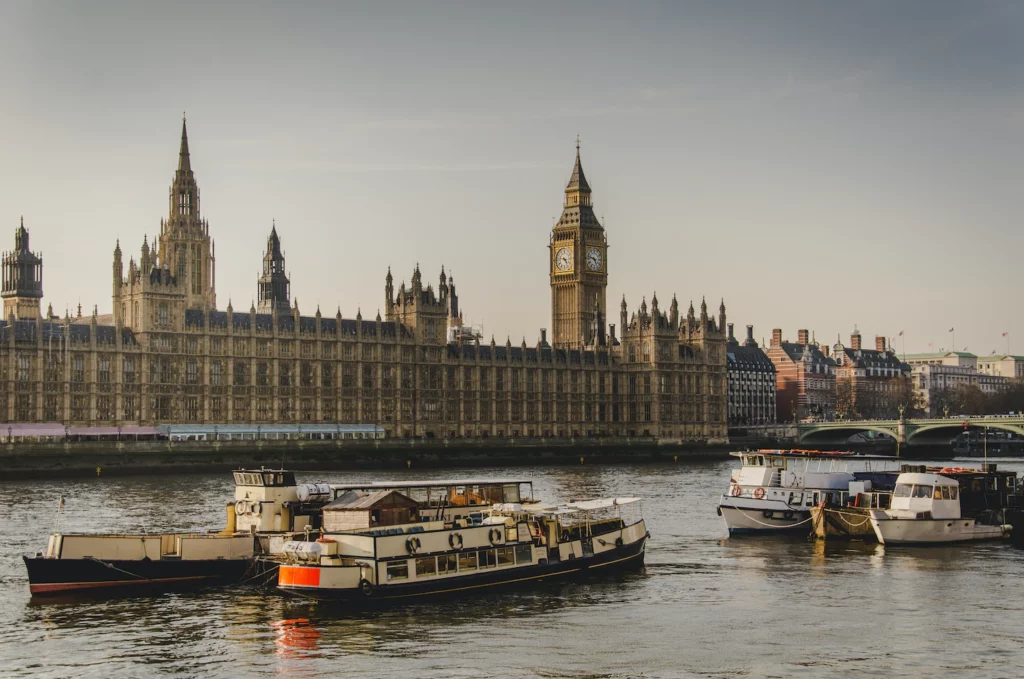
Yesterday evening the Prime Minister announced a snap election for 4 July. Though the PM’s speech lasted just seven minutes, it was just about long enough to hear the chorus to D:Ream’s ‘Things Can Only Get Better’ about a dozen times.
The rain was perhaps a fitting harbinger of what one conservative MP described as “an uphill battle”. This comes as the Conservatives trail behind Labour by around 20 points in the polls.
Murmurings that Sunak would make such an announcement tricked through the Westminster bubble from the late morning onwards. This came as David Cameron cancelled his flight to Albania while other members of Cabinet made their way to Downing Street.
Given Sunak’s decision to call the snap election, Parliament will now be prorogued on Friday (24 May) ahead of six weeks of campaigning.
Reactions in the City
There was a muted response in the price action of sterling following Sunak’s announcement, with most of yesterday’s moves being driven by the expectation that the Bank of England will not now cut on 20 June. Such expectations followed yesterday’s inflation print which came in above the general market consensus.
As we looked at yesterday, following the inflation print Sunak said that it marked a “major moment for the economy, with inflation back to normal. This is proof that the plan is working and that the difficult decisions we have taken are paying off.” It’s worth noting of course that core inflation remains elevated at 3.9% as the Consumer Prices Index including owner occupiers’ housing costs is at 3%.
Elsewhere in the City, some of the market reaction has centred on how the government’s plans to sell shares in NatWest (posed for July) will now be put on hold. The government became the largest shareholder of NatWest following the £46bn bailout of RBS. There is also uncertainty around how a future government may follow with plans to reform pensions.
Attention will now turn to the spending plans of each party, its potential inflationary impact and subsequent implications on monetary policy pathways.
July Election
Rishi Sunak has long said that his “working assumption” is that the general election would be held in the second half of 2024. Now that the election will be held on 4 July, he’s just about kept to this assumption (by 96 hours).
It’s understood that the Deputy PM Oliver Dowden and Downing Street’s Chief of Staff Liam Booth-Smith were key proponents of a summer election with some sources saying that many MPs had been keen to get it done sooner rather than later.
According to a recently YouGov poll (conducted on 7 May), some 41% of respondents said that they would like to see a summer election. This far exceeded the 7% who would like to see it in Winter, 9% who favour January and 23% who would want an Autumn election.
It may be of historical interest that the last general election in July was in 1945. This election saw the incumbent Prime Minister Winston Churchill get defeated by Labour’s Clement Attlee who secured a 145-seat majority. The final result saw the Conservatives finish with just 197 seats having lost 189 constituencies.
Calling Time
As of yesterday evening, there are now 65 Conservative MPs who announced that they will not be seeking re-election. This is more than at any time since 1997. Earlier this month we commented on how the former Chancellor Nadhim Zahawi joined a list of prominent MPs including Theresa May, Sajid Javid, Kwasi Kwarteng and Dominic Raab who will be calling it a day at the House of Commons. Given that Parliament will now be prorogued on Friday, this will mark the last couple of days in the House of Commons for those retiring.
There is also 19 Labour MPs who will also not seek re-election in addition to nine SNPs, two Sinn Fein and seven independents.
Related
Comentarios
Find out how we have helped our clients meet their hedging requirements.

HCFX se une a Marex
Un gran paso adelante cuando HCFX se une a Marex

El dólar trata de consolidarse
La moneda común volvió a coger fuerza ayer martes tras los datos de sentimiento económico de Alemania, que fue mejor de lo esperado.

Powell toma la palabra: Sin prisa por continuar con la flexibilización
El euro experimentaba ligeras perdidas durante la sesión asiáticapero mantenía la mayoría del terreno ganado al dólar durante la semana pasada.
El mercado espera a la FED
La moneda común cerró la pasada semana confirmado su momento de fortaleza en su cruce particular frente al billete verde.
Las amenazas arancelarias de Trump centran la atención
El par EURUSD comenzó la semana con gap bajista, el cual se rellena a primera hora de la mañana.
Los Bancos Centrales focalizan la atención de la semana
El Euro empezaba la jornada de hoy perdiendo parte del terreno ganado al billete verde durante el fin de semana, aun cotizando en niveles no vistos desde diciembre.

El mercado espera la decisión de la Fed

Miradas puestas en la decisión del BCE
El par EURUSD amanece estable a la espera de los datos macroeconómicos de esta semana...
¿Preparado para hablar de cambio de divisas?
Contacte con nosotros ya mismo si desea conocer cómo la estrategia de operaciones cambiarias puede tener un gran impacto comercial en su negocio.
 English
  Italian
  Spanish