PMIs in Focus
Release of UK PMIs sees contractions in services and manufacturing, expanding US PMIs, and what's happening today.
UK PMIs In Focus
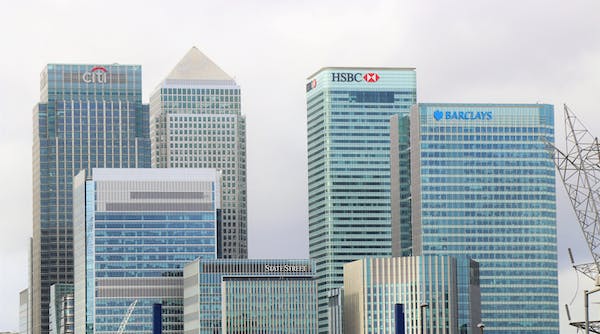
Yesterday’s UK PMI release saw services and manufacturing in contractionary territory having hit 49.2 and 45.2, respectively. This came against expectations of services hitting 49.5 and manufacturing hitting 45, with the composite figure missing expectations of 48.8, having come in at 48.6.
Yesterday’s PMI print indicated that output has reduced for the third consecutive month across the private sector, indicative of economic activity slowing with monetary conditions being at their tightest level since 2008. This involved the services sector output contracting at its highest level since January, while manufacturing output eased for the eighth consecutive month.
This eight-month period of contraction within the manufacturing sector, which represented the most protracted period of decline since 2008-09 in the wake of the Global Financial Crisis. Here, the S&P press release noted how “manufacturers noted that customer destocking and a lack of incoming new work to replace completed contracts had weighed on production schedules”.
Unlike the US private sector, which saw American firms’ 12-month economic outlook improve to its highest level in well over a year, economic optimism fell in the UK for the first time since July as growth expectations similarly diminished. According to the survey, firms “cited worries about the UK economic outlook and constraints on spending due to higher borrowing costs.” Such fall in optimism fed into the labour market cooling as many companies conducted that hiring freezes.
Some positive news however came in relation to inflation figures, with input price inflation easing for its third consecutive month to its lowest level since early 2021. While the data suggested that some business saw higher costs, the primary drivers behind this was citied as increased labour costs and fuel prices. Commenting on this, the Chief Business Economist at S&P Global Market Intelligence said that “In this context, any upward inflation pressures due to higher oil prices will be a major concern, meaning it would be unlikely for policymakers to rule out the possibility of rates rising again later in the year”.
Accordingly, all eyes now turn to the BoE interest rate decision on 2 November.
US PMI Beat Expectations
Yesterday showed US PMIs come in stronger-than-expected, with the services and manufacturing index both in expansionary territory, having risen to 50.9 and 50, respectively.
When looking at the composite figure, the print came in at 51, up from last month’s figure of 50.2%, indicating that the rate of expansion has increased at its highest rate since July, though August and September’s Prints were pretty well stagnant.
According to the data, released by S&P Global, demand conditions for manufacturers improved for the first time in around half a year. Nevertheless, new business continued to see some headwinds, with demand falling for the third consecutive month. Elsewhere, while there was some marginal job creation, uncertainty around future economic conditions was cited as a reason why some employers are being more conservative in hiring.
When looking at inflation, operating expenses rose at the slowest pace in three years, suggesting that inflationary pressures may be continuing to ease. Indeed, average selling price inflation similarly came in at its lowest level since June 2020. Here, S&P noted that “firms were reportedly keen to pass through any cost savings made to customers in a bid to drive sales”.
Today’s Events
Today will see the Bank of Canada make their latest interest rate decision at 1500. The benchmark interest rate was kept unchanged at their last monetary policy meeting on 6 September, and the general market consensus is indicating that rates will again be kept unchanged today. This comes as the Canadian economy continued to face many economic headwinds with a recent slowdown in growth particularly worrying policymakers. Q2 GDP for example unexpectedly fell 20bps, and thus policy makers will be particularly cognisant of monetary conditions implications on growth.
Later in the day, the ECB’s President Lagarde will speak at 1800, ahead of the ECB’s interest rate decision at 1315 tomorrow.
Related
Comentarios
Find out how we have helped our clients meet their hedging requirements.
HCFX se une a Marex
Un gran paso adelante cuando HCFX se une a Marex

El dólar trata de consolidarse
La moneda común volvió a coger fuerza ayer martes tras los datos de sentimiento económico de Alemania, que fue mejor de lo esperado.

Powell toma la palabra: Sin prisa por continuar con la flexibilización
El euro experimentaba ligeras perdidas durante la sesión asiáticapero mantenía la mayoría del terreno ganado al dólar durante la semana pasada.
El mercado espera a la FED
La moneda común cerró la pasada semana confirmado su momento de fortaleza en su cruce particular frente al billete verde.
Las amenazas arancelarias de Trump centran la atención
El par EURUSD comenzó la semana con gap bajista, el cual se rellena a primera hora de la mañana.
Los Bancos Centrales focalizan la atención de la semana
El Euro empezaba la jornada de hoy perdiendo parte del terreno ganado al billete verde durante el fin de semana, aun cotizando en niveles no vistos desde diciembre.

El mercado espera la decisión de la Fed

Miradas puestas en la decisión del BCE
El par EURUSD amanece estable a la espera de los datos macroeconómicos de esta semana...
¿Preparado para hablar de cambio de divisas?
Contacte con nosotros ya mismo si desea conocer cómo la estrategia de operaciones cambiarias puede tener un gran impacto comercial en su negocio.
 English
  Italian
  Spanish